Inside the Tingkat: Designing the DEFCON SG 2026 Singapore Community Badge
Defense in Depth, served in a Tingkat

CONTRIBUTOR
The Story
The creation of this badge was almost accidental, and my involvement in this project was nothing short of a miracle. I’d like to take you through the entire process of how this piece of Singaporean heritage reached the global hacking stage.
The journey began in October 2025 when I was introduced to Div0 by a senior. The badge was originally slated for debut at SINCON in October 2026, but the timeline was accelerated when Div0 confirmed the first ever Singapore Village at DEFCON SG in April 2026. The mission was to showcase the unique local "cyber scene" with a badge that felt like home, and for it to contain the 9 CTF challenges.
This definitely increased the pressure and it was a race against the clock, especially since I had to juggle development throughout my busy second semester. Moreover, it was my first time creating something that was not a simple small scale hobbyist project. I even had to take time out of my Korea trip to produce the first prototype, but much like a well-packed meal in a Tingkat, everything eventually fell into place.
Design Inspiration: The Tingkat
Previous SINCON badges featured Khong Guan Building and Iced Gems badges.
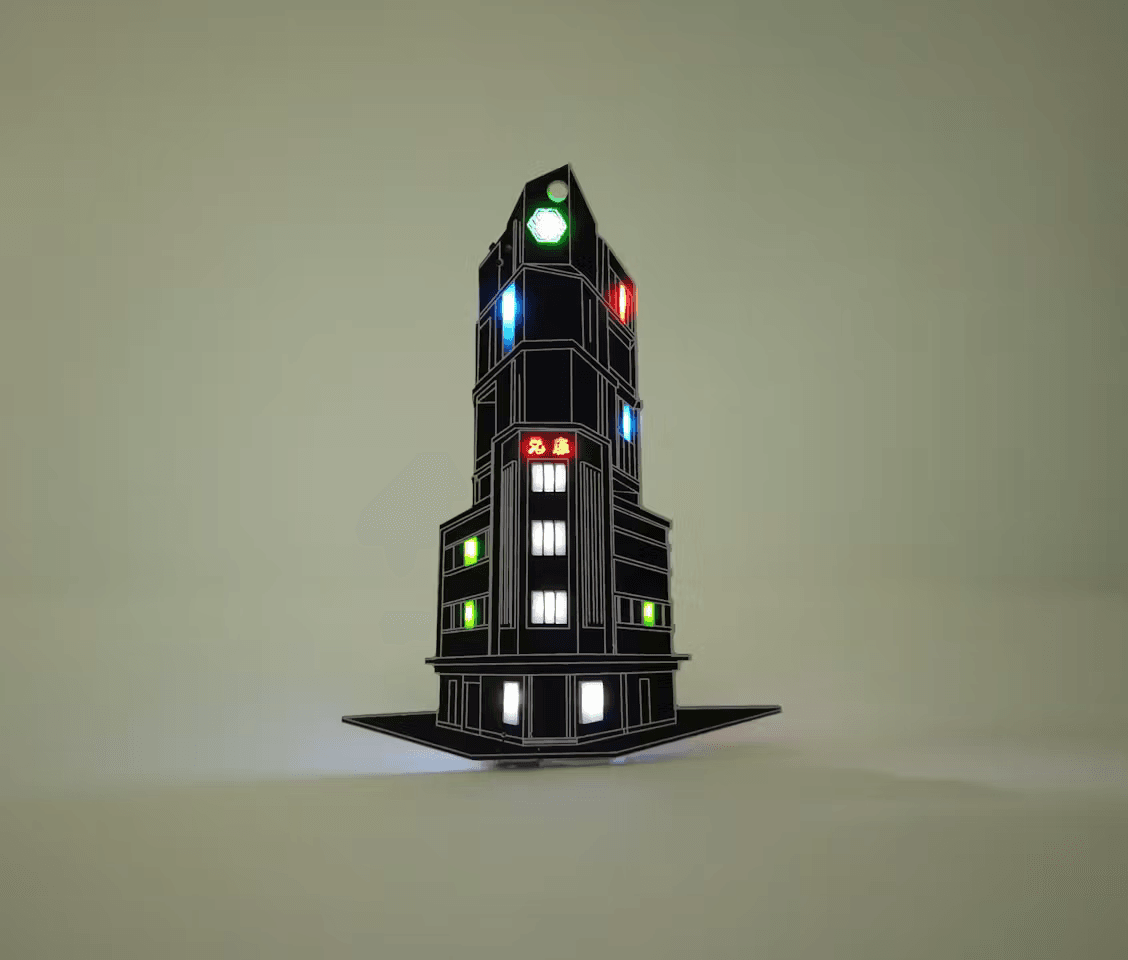
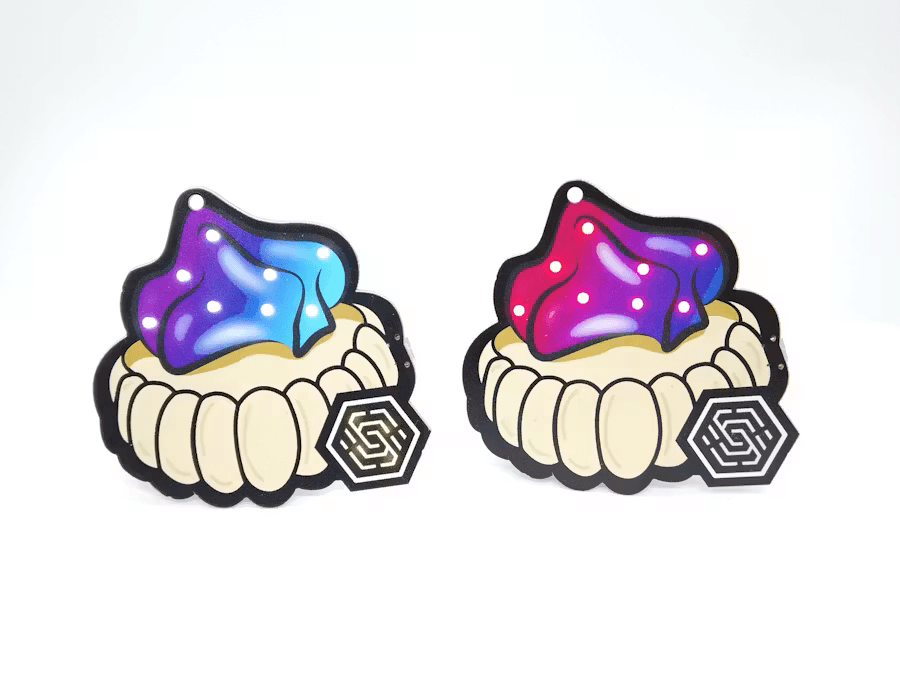
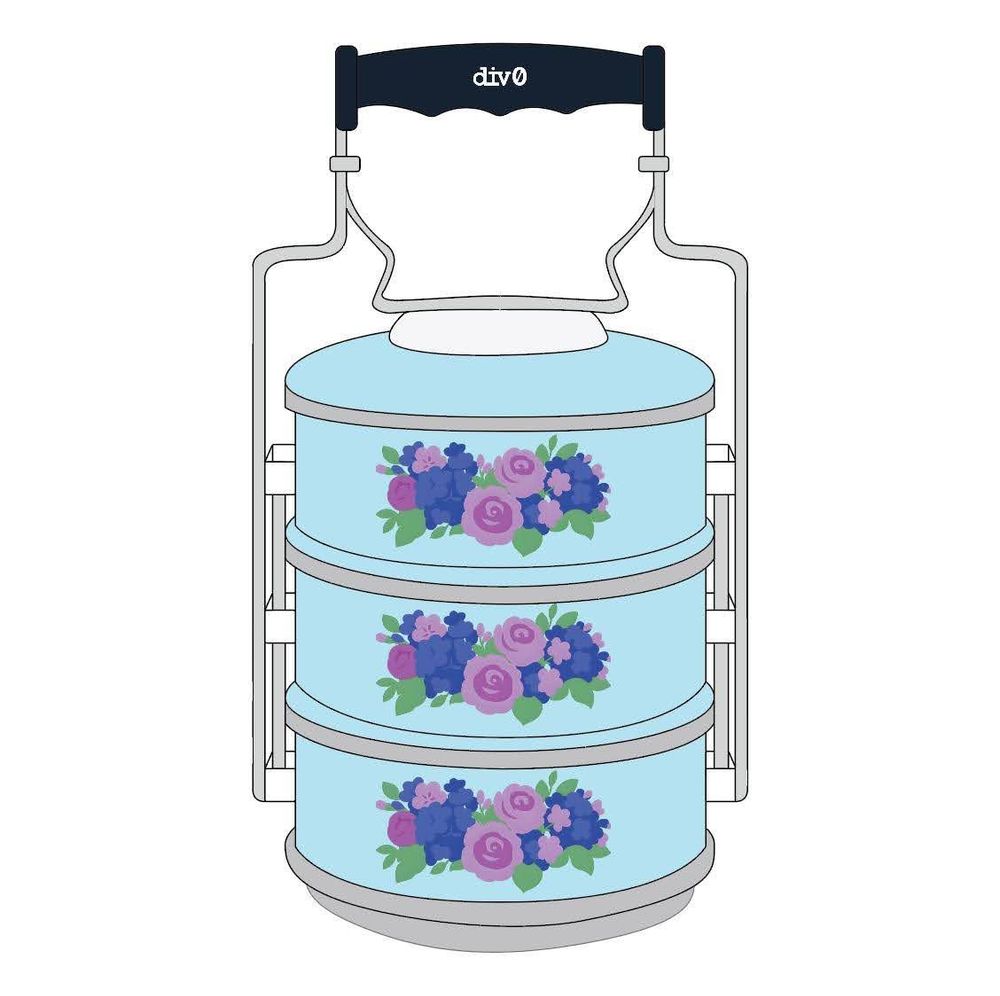
Naturally, the 2026 design followed this legacy by being unmistakably Singaporean, and we landed on the Tingkat - the traditional tiered tiffin carrier. We’re proud to say that the engineering and design were also done locally for the Tingkat badge.
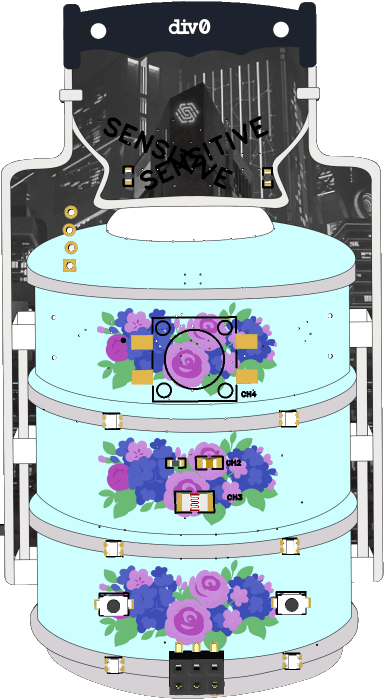
But why the Tingkat? In Singaporean culture, the Tingkat represents more than just a meal; it represents layers, variety, and the comforts of home. In the context of cybersecurity, it’s a perfect metaphor for Defense in Depth. Each layer of the carrier represents a different security control - if you want the "dessert" at the bottom, you have to bypass the layers above it.
The SAO Trio: A Byte-Sized Feast
Most people are probably captured by the flashy RGB LEDs and OLED display, but those were actually Shitty Simple Add Ons, though I did realise in the end that what really makes a badge to the average customer is these attention catching components.
Chilli Crab, Kaya Toast, and Kueh Lapis. These are the quintessential Singaporean dishes we included to complement the main Tingkat badge. They capture the multi-sensory experience of a Singaporean hawker center, stored right in your own Tingkat.
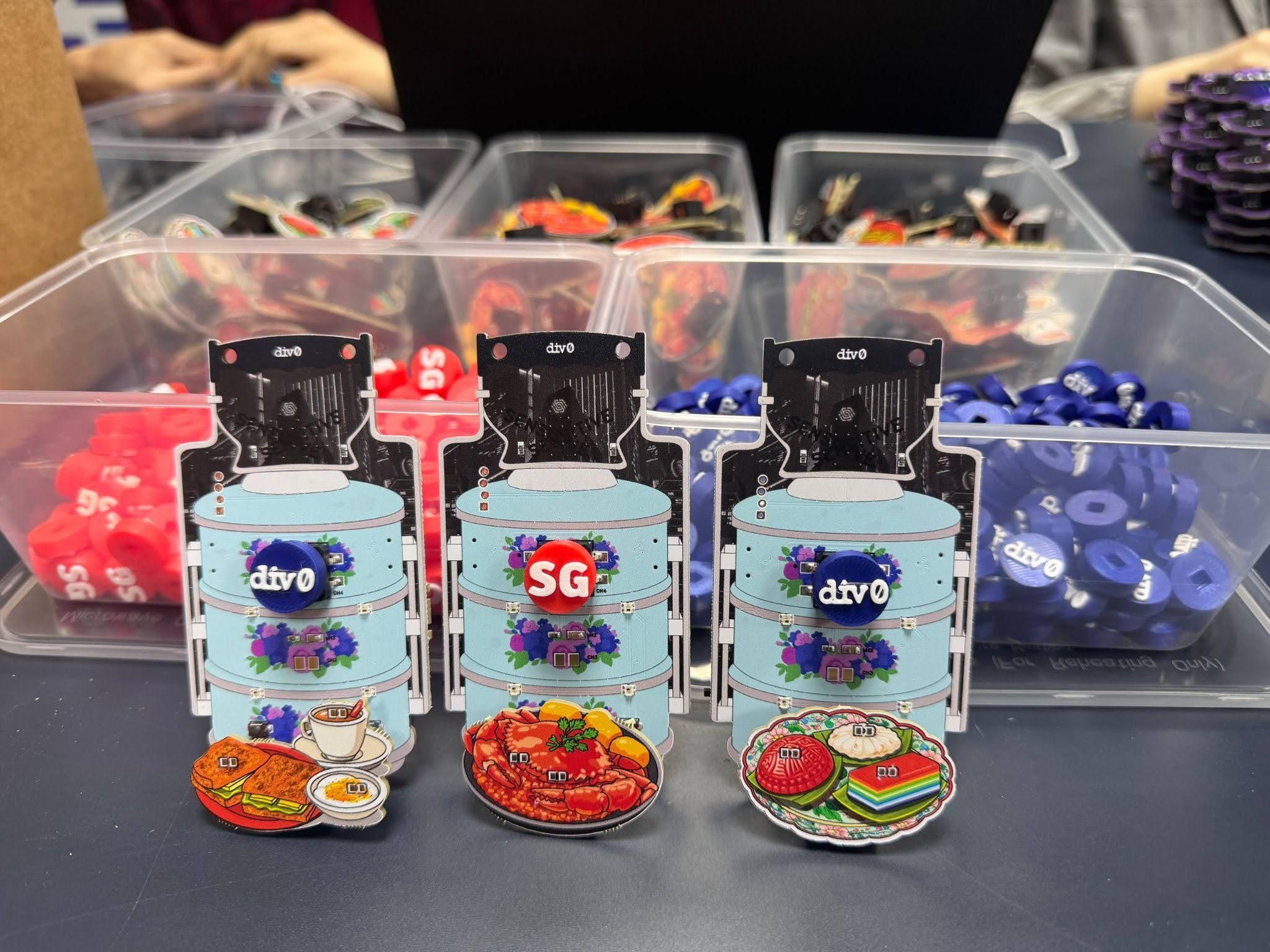
The Chilli Crab celebrates Singapore’s world-famous seafood. The Kaya Toast pays tribute to the staple local kopitiam breakfast with green kaya and yellow butter. The colourful Kueh Lapis is a beloved traditional childhood dessert for many Singaporeans.
Together, they represent a tasting menu of Singaporean food identity, turning the badge into a portable celebration of local heritage.
Hardware Design
The artwork was mainly handled by Div0's creative, Helen Fransiana. The original design did not have the black background, however we included it due to concerns over the structural integrity of the thin Tingkat handles.
First, we needed a circuit board as the base. We decided on the RP2040 since it was a familiar Microcontroller Unit (MCU). I took the barebones from a RP2040 development board, then curated the other components. We needed a screen to display information, and a 0.91-inch OLED display fit our space constraints neatly. We also needed buttons for tactile user interaction and LEDs for visual impact.
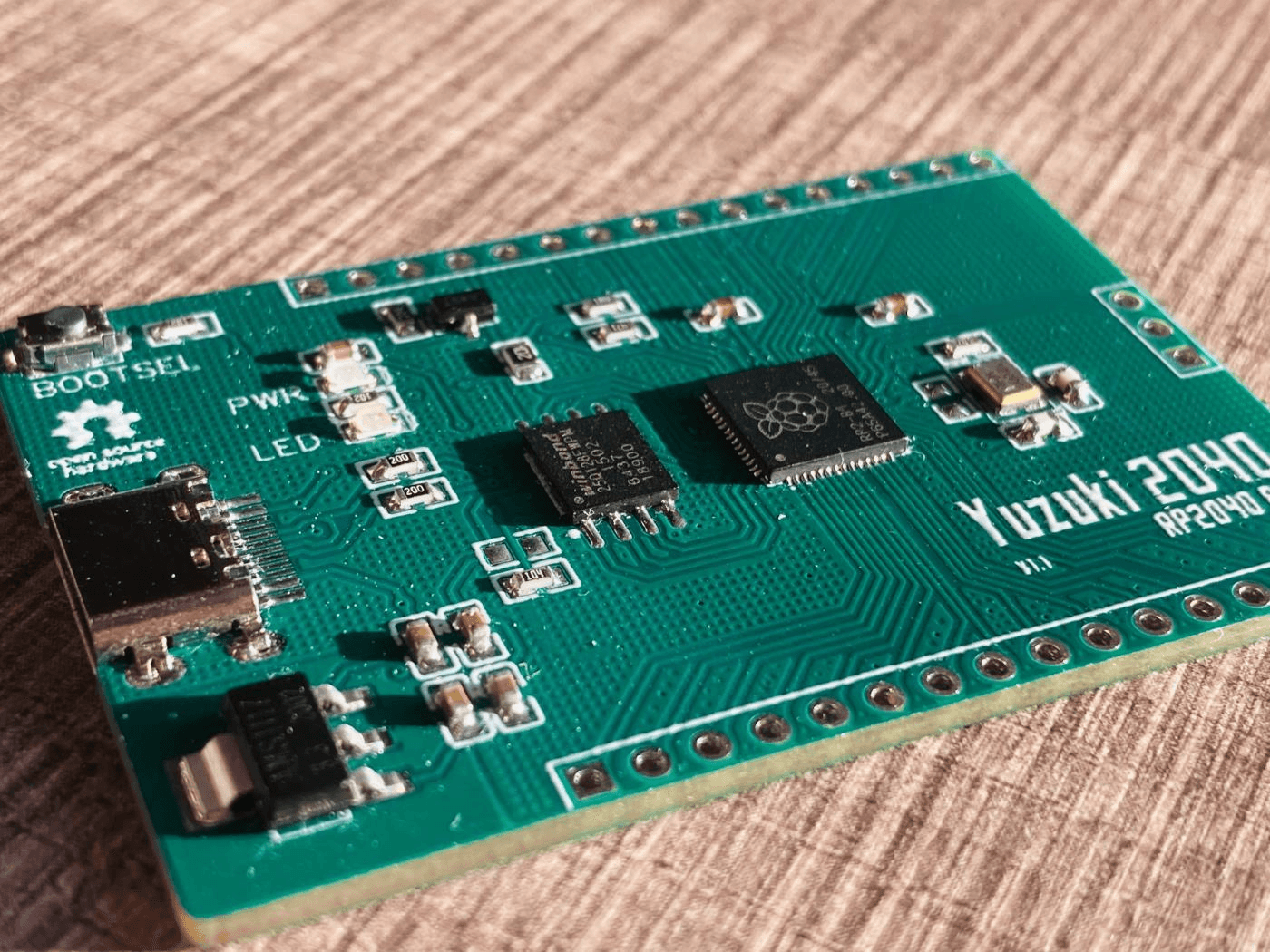
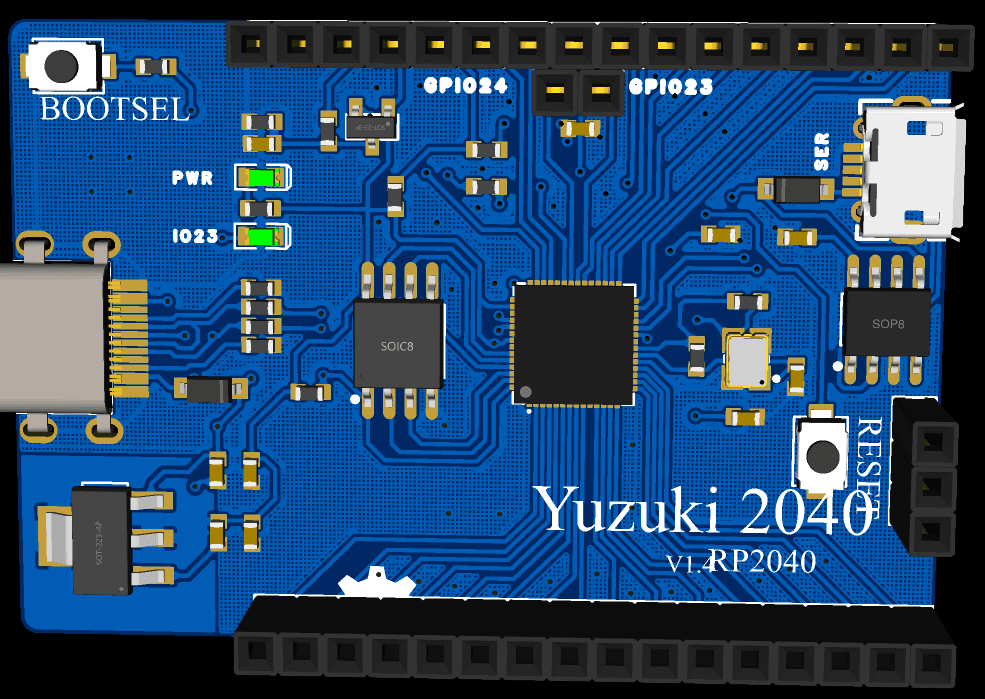
The Tingkat was to be printed as a coloured silkscreen, which is simply ink printed directly on the circuit board. As we were manufacturing this with JLCPCB (a PCB fabrication company), we used their in-house design tool - EasyEDA. I previously used KiCAD as my primary Electronic Design Automation (EDA) software, but I now prefer EasyEDA for its convenience in placing designs.
We originally planned to use AAA batteries to power the badge, but I couldn't find space to place the battery holder, so I thought 2 coin batteries placed in series would be sufficient - they looked cool too! Little did I know that would be our biggest downfall.
In the testing process, I validated every component in isolation and the batteries powered the board perfectly. For ease of development, I switched to USB-C, which simultaneously powered the device. However, the OLED and LEDs are power hungry components which caused the badge to struggle in powering up.
As the only difference between a perfectly functional badge and a faulty one was whether I powered it using USB or the batteries, it was easy to pinpoint the root cause to be a power issue. Ultimately, we confirmed the diagnoses using a multimeter to probe the voltage output of the batteries when powering up the badge - they dropped significantly due to the current draw and was insufficient to power the badge. It was definitely a humbling but great learning experience for myself.
Now, the badge had two conflicting requirements. It had to run at a relatively slower speed of 12Mhz to accommodate the smaller coin battery. However, the USB port to access the CTFs only works at a higher speed of 48Mhz.
Nonetheless, we managed to find a workaround in the form of a firmware update which we uploaded to the badge for users who bought it from the second day onwards. Users can confirm that they have the new firmware by powering on their badge and seeing the updated slogan of - “Welcome to Div0 x SG Community!”. For users who still have the old version, they can update their firmware by following the instructions via this link. Once the firmware has been updated, users will need to hold down the middle button before plugging in the USB cable. This allows them to activate the USB and access the challenges.
I now proudly present, the ‘Div0 Tingkat’ eBadge.